
Why Traditional File Uploads Break Modern Web Apps
Files upload with Flowdrive
January 21, 2026 · File-Upload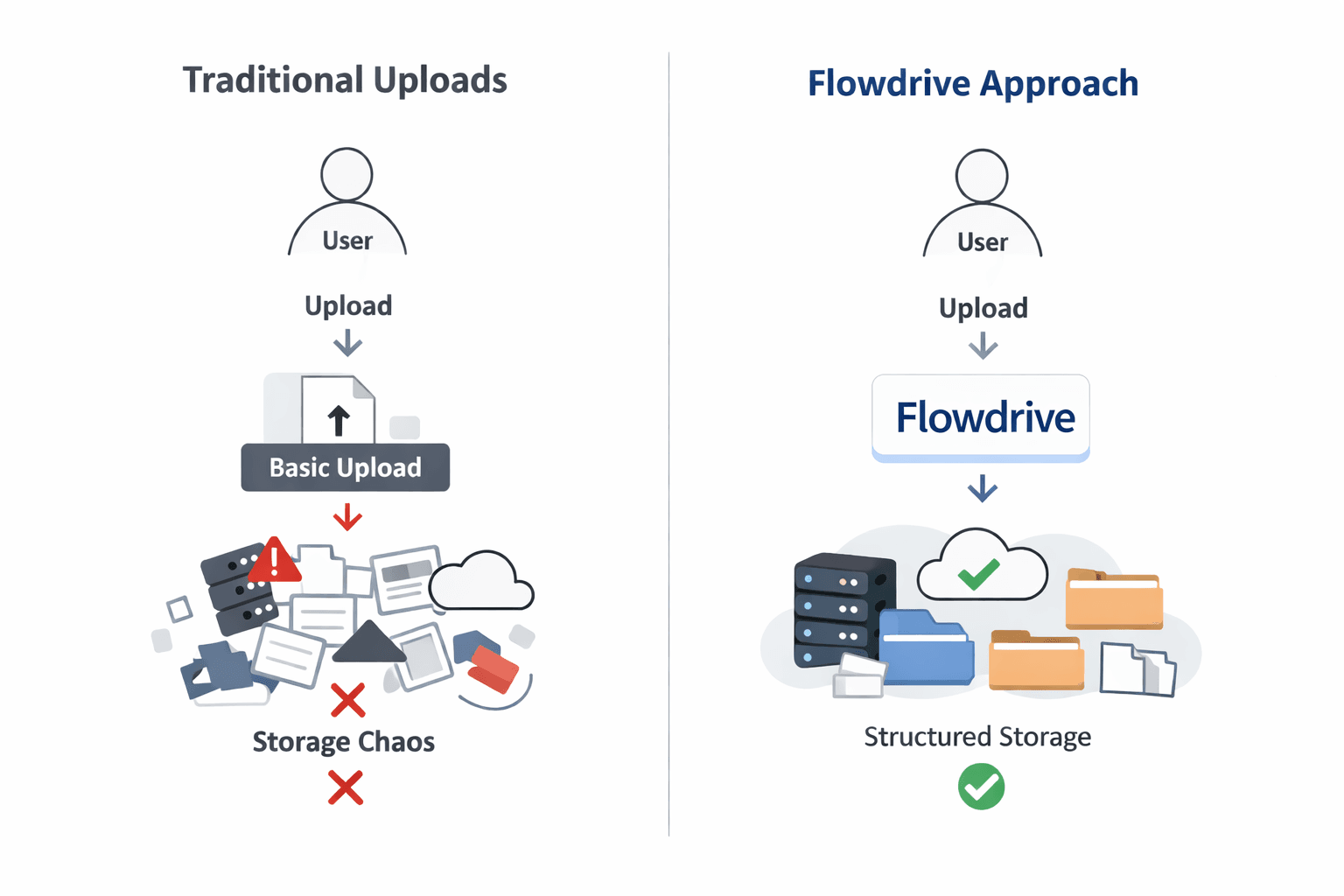
Traditional file uploads were never intended for modern web applications. They worked when the products were basic. When traffic was low.When files were an afterthought. However, uploads are now ubiquitous and play a central role in many products.And that's when the difficulties start.
File Uploads Haven't Evolved, But Web Applications Have
Most traditional file upload systems rely on the same assumptions:
- Files are uploaded occasionally.
- Storage is static.
- Access rules are straightforward.
- Scale is predictable.
All of these assumptions are broken by modern web applications.
Today's Products:
- Manage user-generated content at scale
- Depend on real-time interactions.
- Supports numerous user roles and permissions.
- Need clear, responsive user experiences.
Traditional upload mechanisms were not designed for this situation.
The First Crack: Uploads Are Treated as a Small Feature
In many products, file uploads begin as a quick add-on.
A basic input field.
A storage bucket
A backend endpoint.
It works, until it doesn't. As usage increases, uploads gradually become:
- Harder to maintain
- Harder to debug
- Harder to scale
What appeared to be a minor enhancement evolves into a fragile system that holds core product workflows together.
The Real Issues Emerge Over Time
Traditional file uploads rarely fail all at once. They fail slowly.
- Poor user experience.
- Failed uploads without any feedback.
- Long delays without progress signs.
- Confusing errors that users do not grasp
2. Backend Complexity
- Custom logic for each new upload use case.
- More endpoints to maintain.
- More edge cases to address.
3. Messy File Management
- Files are dispersed across storage.
- There's no obvious structure or organization.
- Difficult to track ownership and access
4. Scaling Problems
- Performance difficulties as uploads increase.
- Increased storage and maintenance costs.
- Systems that were not built to grow.
By the time teams identify the problem, file uploads have been deeply buried in the product.
Why Patching Traditional Uploads Does Not Work
When upload issues arise, teams frequently attempt to repair them:
- Expand backend logic
- Integrate additional tools
- Create workarounds.
This frequently makes matters worse. Each patch adds complexity. Each workaround generates technical debt. Instead of a clean system, uploads become a collection of fixes that are difficult to understand and maintain.
Modern Web Applications Require A Different Approach
File uploads are no longer just about getting files from point A to point B.They are part of broader workflows.
- Submitting documents
- Managing User Content
- Editing and Reusing Files
- Managing access and permissions
Modern products require upload mechanisms that are:
- Flexible
- Structured,
- Scalable
- Easy to integrate
That's where traditional upload setups fall short
How Flowdrive Handles File Uploads Differently
Flowdrive was created with modern web applications in mind.Instead of regarding uploads as a minor feature, Flowdrive views them as infrastructure.It provides a unique layer for
- Uploading files
- Managing and organizing them
- Controlling how they’re accessed
- Scaling file workflows as products grow
Flowdrive integrates into your frontend and removes the need to build and maintain heavy backend upload logic. The result is a cleaner system that grows with your product.
What Does This Mean for Builders?
This is an important transition for builders and teams.
This means:
- Fewer fragile upload implementations.
- Spend less time debugging file-related difficulties.
- Cleaner codebases.
- More reliable user experiences.
Instead of dealing with upload issues afterward, you begin with a system geared to handle them.
Rethinking File Uploads
Traditional file uploads did not fail because they were ineffective. They failed because the web had changed. Modern web programs expect more from file workflows, which necessitates a different foundation. Flowdrive exists to give that foundation.
View how Flowdrive handles file uploads in live products. Easily upload, manage, and control files without requiring complex backend systems.
Start hosting for free
Unlimited file hosting for Webflow projects.